
Introduction
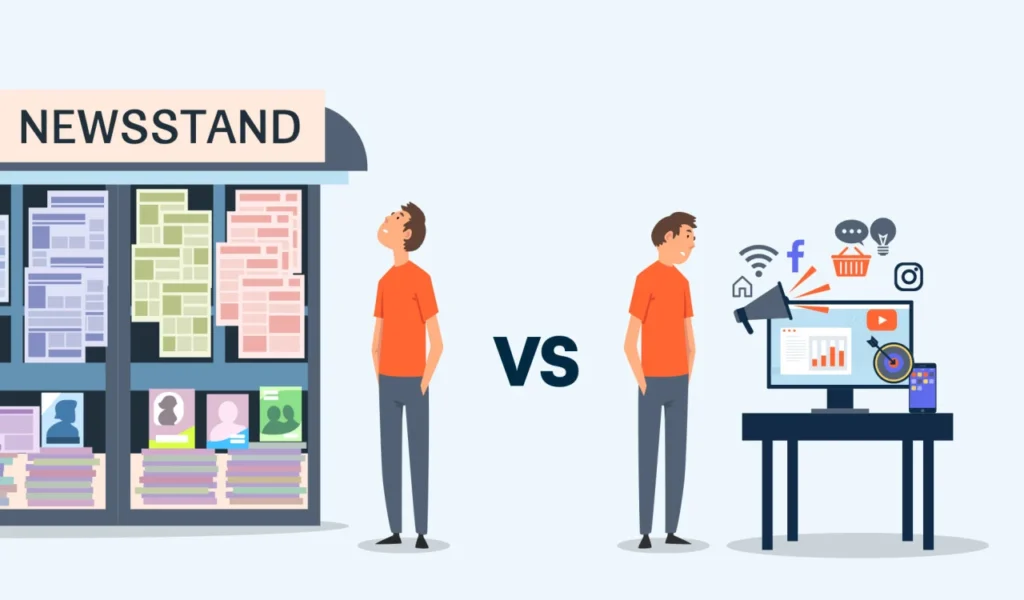
Marketing plays a major role in the growth of every business. No matter how good a product or service is, people need to know about it before they can buy it. This is where marketing becomes important. Over time, marketing has changed a lot. Earlier, businesses used newspapers, radio, television, banners, and pamphlets to reach customers. Today, businesses also use websites, search engines, social media, emails, and online ads. This has created an important comparison: digital marketing vs traditional marketing.
Both types of marketing have their own advantages and limitations. Some businesses still trust traditional methods, while many modern brands prefer digital channels because of their reach and measurable results. The right choice depends on your business goals, target audience, and budget.
In this blog, we will understand what digital marketing and traditional marketing are, their main differences, and which one is better for your business.
What is Traditional Marketing?
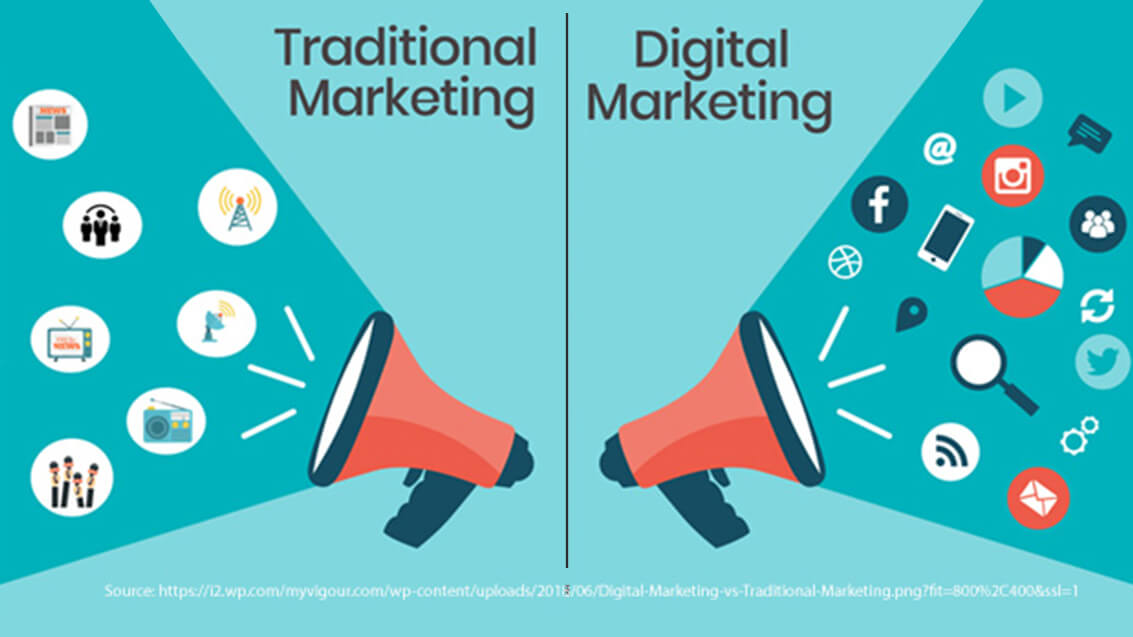
Traditional marketing refers to the older and more conventional methods of promotion. These methods have been used for many years and include:
- Newspaper advertisements
- Magazine advertisements
- Television commercials
- Radio ads
- Billboards and hoardings
- Flyers, brochures, and pamphlets
Traditional marketing is mainly used to target a wide audience. It is commonly seen in local businesses, large brands, and political or public campaigns. These methods can create strong brand awareness, especially when a business wants to reach people in a specific local area or among audiences who do not spend much time online.
One of the biggest strengths of traditional marketing is that it feels familiar and trustworthy to many people. For example, a newspaper ad or a television commercial can make a brand look established and credible.
However, traditional marketing also has some drawbacks. It is usually expensive, especially TV ads, radio spots, and large billboards. It is also difficult to track the exact results of a campaign. A business may know that people saw the ad, but it is hard to measure how many customers made a purchase because of it.
What is Digital Marketing?
Digital marketing means promoting products or services through online channels. It includes different methods such as:
- Search Engine Optimization (SEO)
- Social Media Marketing
- Content Marketing
- Email Marketing
- Pay-Per-Click (PPC) Advertising
- Affiliate Marketing
- Influencer Marketing
Digital marketing has become very popular because more people now use the internet every day. From searching on Google to scrolling through Instagram and watching videos on YouTube, customers spend a lot of time online. This gives businesses a great opportunity to connect with their audience where they are most active.
The biggest advantage of digital marketing is that it is highly targeted. Businesses can show ads to people based on age, gender, location, interests, and even online behaviour. It is also easier to measure results. With tools like Google Analytics and social media insights, businesses can track clicks, impressions, leads, conversions, and return on investment.
Digital marketing is also more budget-friendly than traditional marketing. Even small businesses and start-ups can run effective campaigns online without spending a huge amount of money.
Digital Marketing vs Traditional Marketing: Key Differences
When comparing digital marketing vs traditional marketing, several major differences stand out.
1. Cost
Traditional marketing is usually more expensive. Printing brochures, running TV commercials, or putting up billboards requires a bigger budget. On the other hand, digital marketing offers affordable options. A business can start with basic SEO, social media posting, or low-budget online ads.
2. Targeting
Traditional marketing often targets a broad audience. For example, a billboard is seen by everyone passing by, whether they are interested or not. Digital marketing allows precise targeting. Businesses can focus only on the people who are most likely to become customers.
3. Measurability
This is one of the biggest advantages of digital marketing. Traditional marketing makes it difficult to know how well a campaign performed. Digital marketing provides real-time data, helping businesses understand what is working and what needs improvement.
4. Engagement
Traditional marketing is mostly one-way communication. Customers see an ad but usually cannot respond immediately. Digital marketing creates two-way communication. People can comment, share, like, message, or even review a business online.
5. Reach
Traditional marketing is effective for local reach and mass awareness. Digital marketing can reach a global audience instantly. A small business can connect with customers not only in its city but also across the country or even worldwide.
Benefits of Traditional Marketing
Traditional marketing still has value, especially in certain situations. It can create a strong local presence, especially for businesses such as restaurants, coaching centres, clinics, or retail stores. It also works well when targeting older audiences who may trust print media or television more than online ads.
Another benefit is repetition in the physical world. A billboard placed in a busy area can remind people about a brand every day. Printed materials also give something tangible to customers, which sometimes creates a stronger impression.
Benefits of Digital Marketing
Digital marketing offers many benefits that make it the preferred choice for modern businesses. It is cost-effective, flexible, and highly measurable. Businesses can quickly change their campaigns if they are not getting good results. They can test different headlines, images, or offers and improve performance.
It also supports long-term growth. For example, SEO helps websites rank on search engines, bringing organic traffic over time. Social media marketing helps businesses build a loyal audience and maintain regular communication with customers.
Most importantly, digital marketing gives even small businesses a chance to compete with larger brands.
Which One is Better?
The answer to digital marketing vs traditional marketing is not the same for every business. If your audience is active online, digital marketing is usually the better option. It provides better targeting, lower costs, higher engagement, and measurable results.
If your goal is to create local awareness quickly and your audience trusts offline channels more, traditional marketing can still be useful. For example, a local event, newspaper advertisement, or billboard can work well in some cases.
In reality, the best strategy is often a combination of both. A business can use traditional marketing for brand visibility and digital marketing for engagement and conversions.
Conclusion
The comparison of digital marketing vs traditional marketing shows that both methods have their own strengths. Traditional marketing is effective for mass awareness and local visibility, while digital marketing is better for targeted reach, affordability, customer engagement, and measurable performance.
In today’s business world, digital marketing is becoming more important because people spend more time online than ever before. Still, traditional marketing should not be ignored completely. Businesses that combine both methods smartly can get the best results.